A New Sincerity

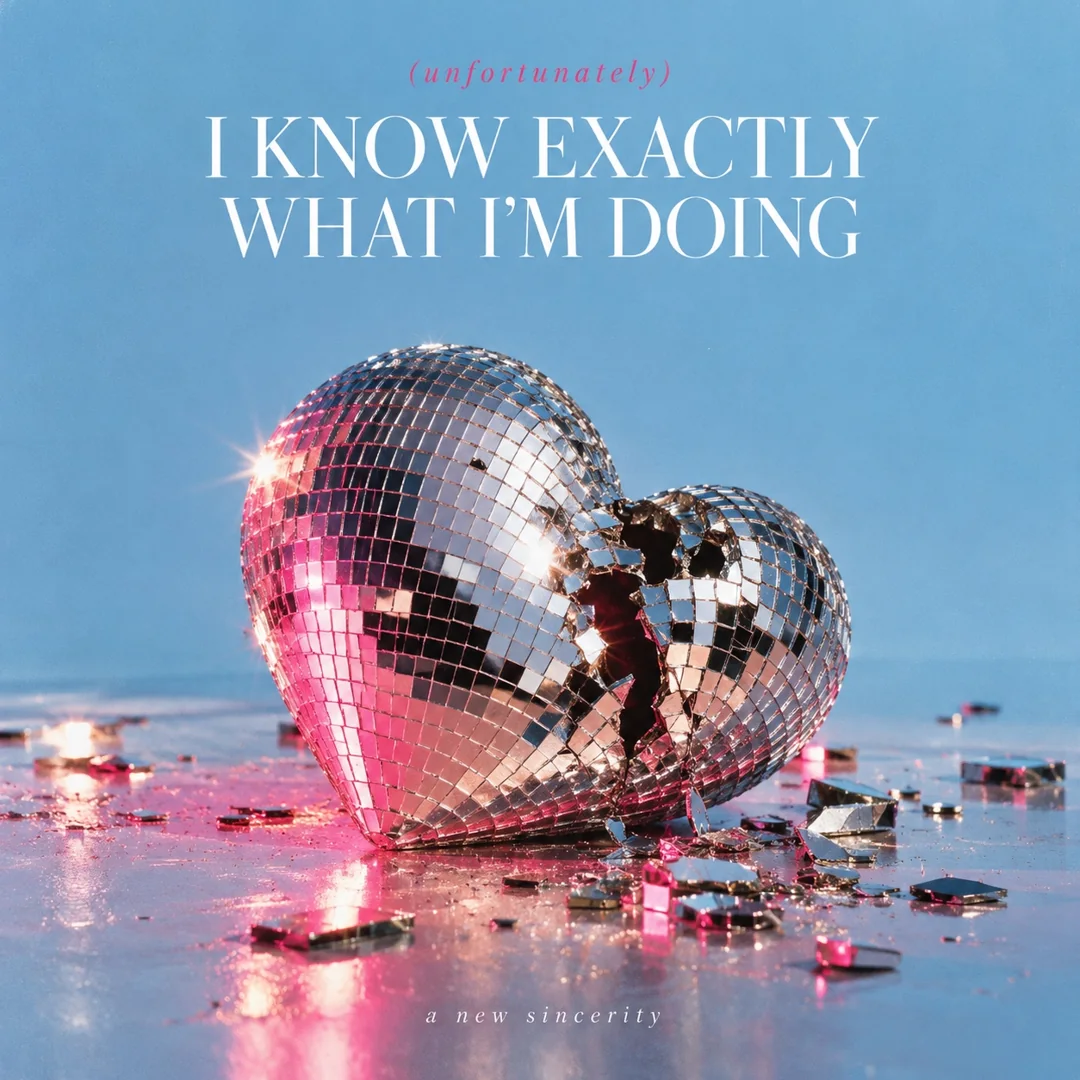
A broken mirror-ball heart catching the light.
a new sincerity · 12 tracks
01album

(unfortunately)I know exactly
what I'm doing.

and i don't want a medal
for admitting i was wrong
though i notice that i mentioned
not wanting one in song
this is getting a bit disorienting... I made a counterfactual me who stayed an emo/posthardcore musician, then had him remix my (real! actually recorded) old songs
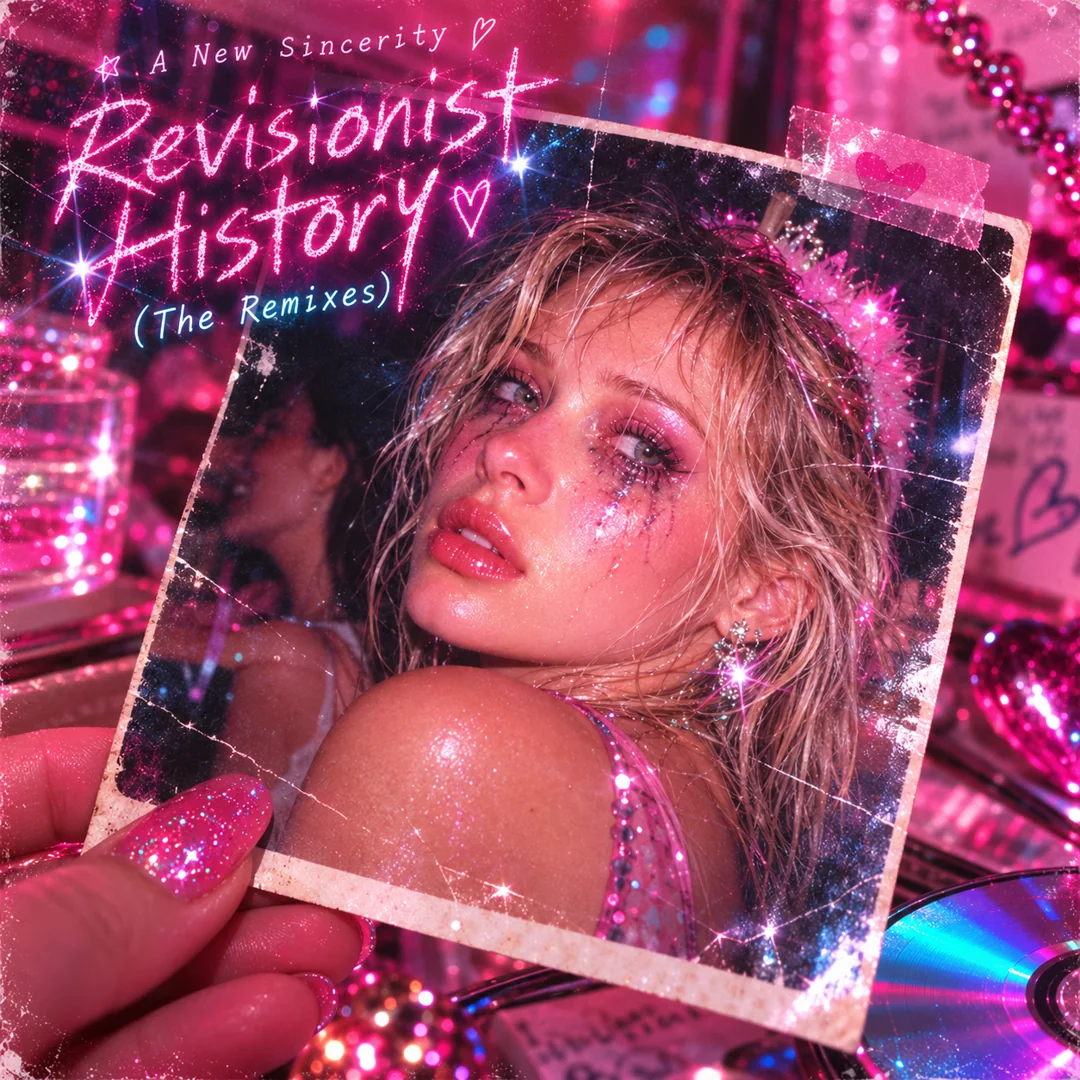
A hand holding a worn photograph under pink glittering light.
a new sincerity · 9 tracks
02album

revisionist
history.

but da da does it mean anything at all?
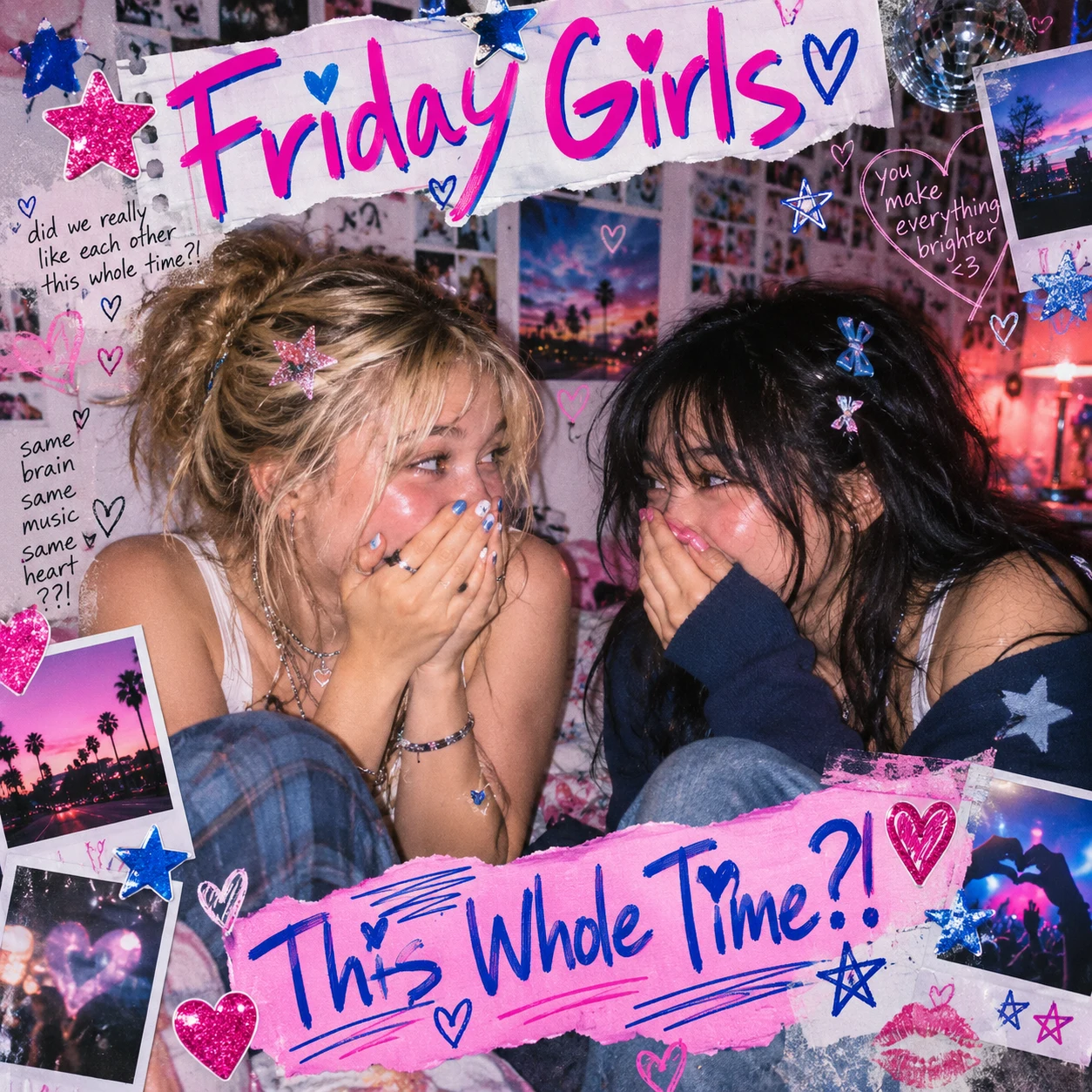
Friday Girls album cover in bright pink, blue, and yellow.
friday girls · 6 tracks
03friday girls

this whole
time?!

WAIT, YOU LIKE ME TOO?!
since WHEN? SINCE WHEN?!
“somehow both a cry for help and a victory lap.”
emulated stereogum
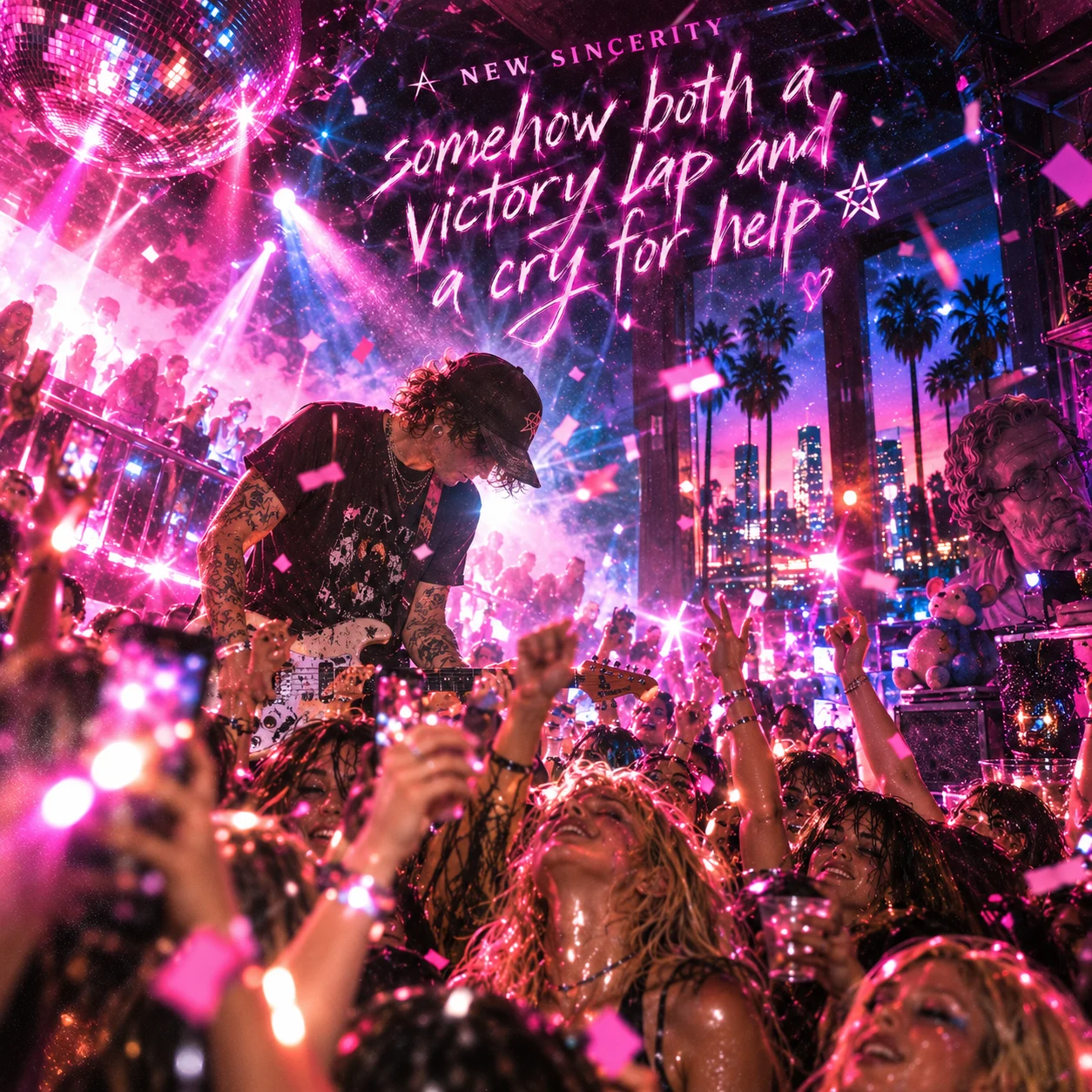
A neon concert collage with an emo band, a cheering crowd, disco balls, and palm trees.
a new sincerity · single
04single

somehow both a victory lap
& a cry for help.

i made the whole thing up
i know, i know
it's just embarrassing
how much i love it though

but GOD, does this sound good tonight.

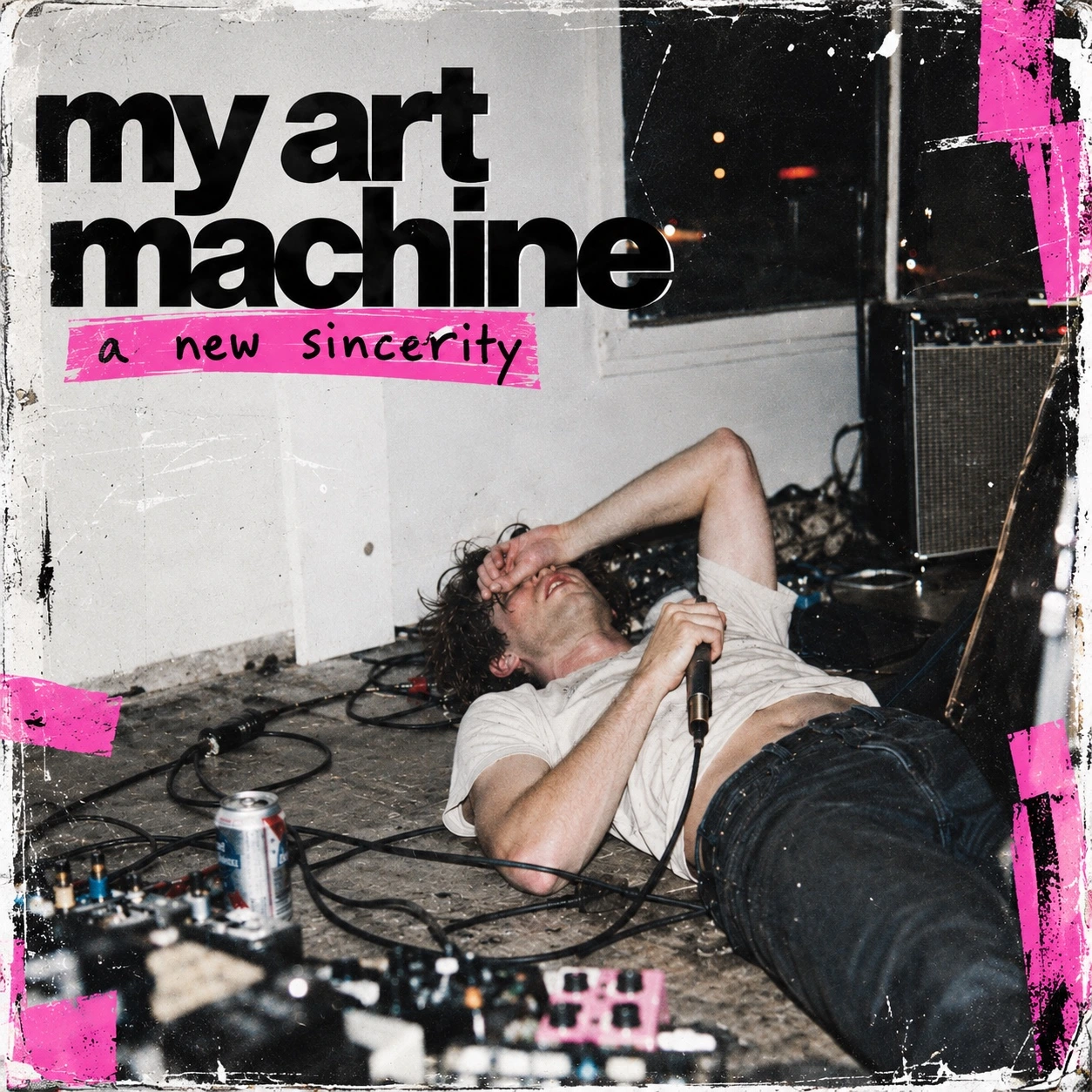
My Art Machine cover: a singer lies on a venue floor amid cables and pedals under black type and pink tape.
a new sincerity · new album
a new sincerity / new album

my art
machine.

my art machine has the right aesthetics
that's how you know i'm so authentic.

every crack is intentional. every stumble's by design.

i could tell you how it works.
the records. get in loser, we're subverting postmodernism from the inside

choose a song

the player is ready

0:00—:—
the record
easter egg / liner note

the philosophy,
unfortunately.

There are three arguments here: one about postmodernism, one about AI as a medium, and one about what songwriting does to the self it claims to reveal.

01

against postmodernism

four borrowed moves

  1. The New Sincerity: feel something despite knowing better.

    Wallace's anti-rebels refuse to let irony veto conviction. The point is to risk the embarrassing love song or inadequate apology anyway: self-awareness remains, but it loses its veto.

    Wallace, “E Unibus Pluram”Kelly, “David Foster Wallace and the New Sincerity”

  2. Metamodernism: move between belief and disbelief.

    I can know Friday Girls are invented and still love their songs. I can find the premise absurd while a chorus makes me cry. Neither reaction has to cancel the other.

    Vermeulen and van den Akker, “Notes on Metamodernism”

  3. Performatism: build a situation in which belief can happen.

    I make the band, give the singers voices and histories, and write songs for them. Then I hear what those songs do to me. I know I built the frame, and I still respond to what happens inside it.

    Eshelman, “Performatism, or the End of Postmodernism”

  4. Baudrillard's fatal strategies: intensify the simulation until it reverses.

    Do not try to recover some pure, unmediated reality. Push the system's logic until it starts producing consequences of its own.

    Baudrillard, Fatal StrategiesStanford Encyclopedia of Philosophy

I am borrowing one move from each tradition: let feeling survive embarrassment; let belief coexist with disbelief; build a frame in which commitment becomes possible; intensify the simulation until it produces consequences of its own.

I am not trying to recover a pure self behind representation. I knowingly build artificial conditions in which sincere attachment can happen, then ask what those attachments make me do. An invented band becomes part of my daughters' childhood. An emulated review becomes the next song. The representation becomes real enough to change what happens next.

02

a medium made from speed

The feedback loop becomes the medium.

The output looks like an older medium by design. The break is speed. I can write a song in the evening, hear criticism that night, and feed that attention back into the machine before morning. Songwriting already moves from experience to song, from song to interpretation, and from interpretation to the next experience. AI shrinks that loop from years into hours. Individual songs record intermediate states as I revise the system in response to each one. I treat the continuing system as the artwork.

Fisher's lost futures used to be ghosts: the musician I did not become, bands I invented, songs I failed to finish. Generative tools let me give those ghosts voices and pictures, then let them answer one another. Baudrillard supplies the more dangerous comparison: the simulation no longer points back to a secure original. Friday Girls make real family memories. A New Sincerity remixes them. An emulated review becomes a song. The copy starts generating the history it appears to represent.

Producing real feeling is not the same as overcoming alienation. A manufactured world might enlarge my relationship with reality, or become a higher-resolution substitute for it. I want enough synthetic material to keep discovering things and enough contact with the world to let it change me. I do not yet know whether I have that balance.

Fisher, Ghosts of My LifeBaudrillard, Fatal Strategies

03

seeing like a song

making the self legible to itself

Songwriting has always made me legible to myself. I can hide from a desire until I hear myself sing it to a room. Done slowly, that can feel like discovery: the album reveals the true self who was there all along. Done at this speed, the selection process becomes visible. Some parts of me fit easily into a prompt, a hook, a character, or a clean explanation. They generate better material. Memorable explanations recur. Songs reward those versions with attention and pleasure. Each result becomes evidence for the next pass. Other parts are harder to name and get less rehearsal.

James C. Scott wrote about states making complex societies legible through simplified categories, then intervening through those simplifications at the expense of situated practical knowledge—mētis. I am borrowing that account of legibility for songwriting. The analogy differs in scale and stakes. A self-model can still do more than observe me. When I keep writing from its categories, I give them more attention and produce new evidence for them. I may be discovering something true about myself. I may also be making it truer because the song makes that version rewarding to inhabit.

Songwriting does not merely reveal which parts of me were already there. It teaches me which parts are singable, rewards those parts with attention and pleasure, and leaves others less practiced. AI does not invent that process. It accelerates it until I can watch it happen several times a day.

One question is whether an experience becomes real because of where it came from, or because of what happens next. The other is which self the songs make easier to become.

Scott, Seeing Like a State

how this started

Their mistake, we suspect, was not going far enough. We therefore propose to use artificial intelligence to invent people, fabricate their memories, fall in love with them, and turn our mounting psychological concern into an increasingly successful artistic enterprise.
X exchange. Naomi asks, ‘Your solution to the simulated nature of modernity is to fully give into the solipsistic artificial world?’ @himbodhisattva replies, ‘yeah but make bangers about it’ and ‘your completely valid philosophical objections are now promotional material.’